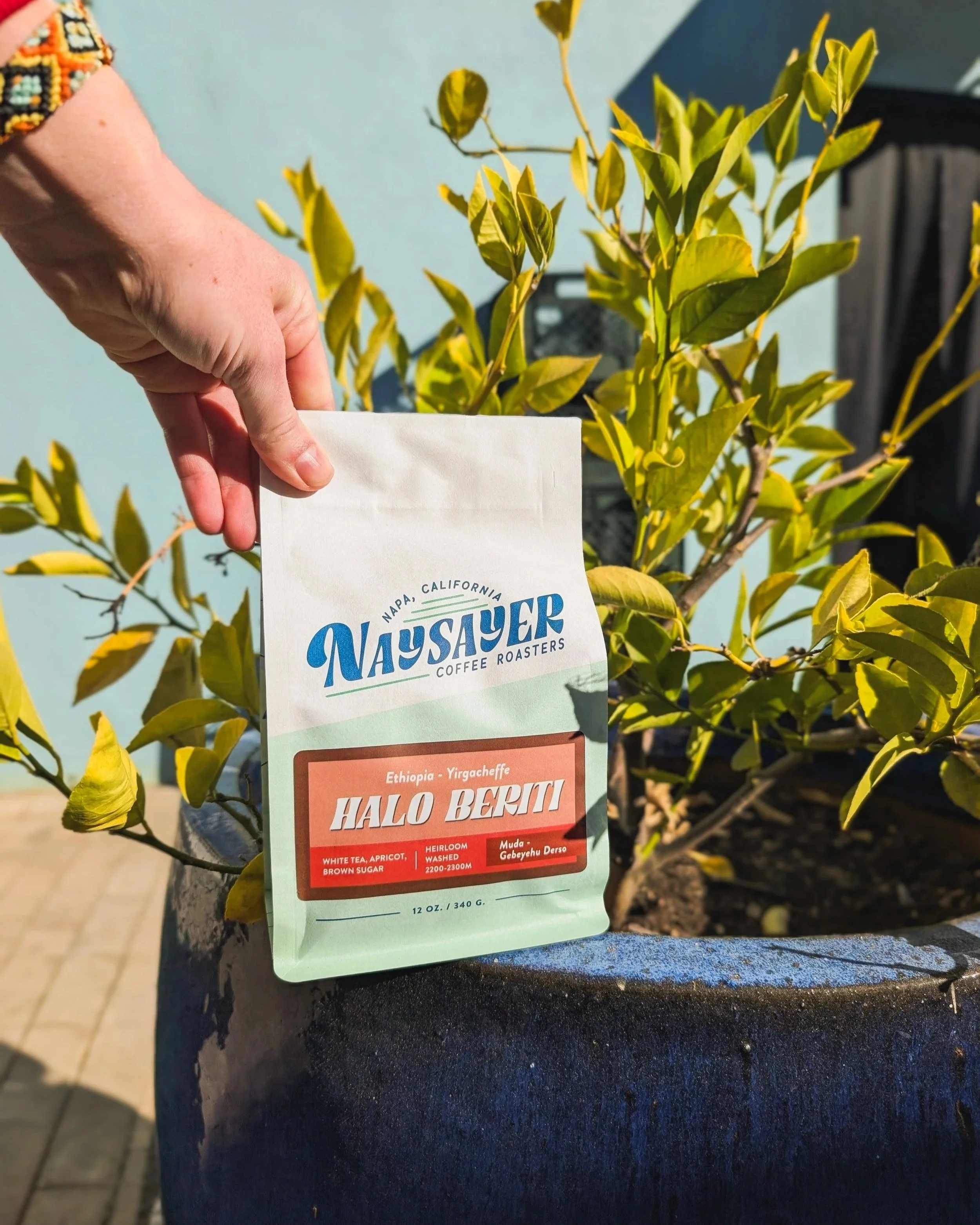
 Image 1 of 1
COUNTRY: Ethiopia
REGION: Beriti, Gedeb district, Yirgacheffe
FARM: Halo Beriti washing station
FARMER/GROWER: 700 to 900 smallholder farmers
VARIETIES: Heirloom
PROCESSING: Washed
ALTITUDE: 2,200 - 2,300 m.a.s.l.
Tasting Notes: White Tea, Apricot, Brown Sugar
DESCRIPTION: This coffee comes from around 700 to 900 smallholder farmers who bring their cherry to the Halo Beriti washing station, all within about three kilometers of the station itself. Most farms in the area run close to 1.5 hectares, grown as garden coffee alongside other crops, and without chemical fertilizer.
The Halo Beriti washing station was established in 2012 in the Gedeb district, one of the well known coffee growing areas of the Gedeo Zone. The station pays farmers a premium for quality cherry and offers credit along with training on the practices that help improve both quality and yield. That kind of steady support matters in a region where families are often working with a hectare and a half of land and turning to coffee to cover school fees, food, and health care.
Halo Beriti sits in the village of Beriti, about 22 kilometers from Gedeb town, in Ethiopia's Yirgacheffe growing region. The area sits between 2,200 and 2,300 meters, with red brown clay soil more than 1.5 meters deep, annual rainfall between 1,780 and 2,100 millimeters, and temperatures that run from 22 to 26 degrees Celsius. Spring water feeds the washing station, and the heirloom Yirgacheffe varietal grown here is well suited to the altitude and climate.
This lot is fully washed, following the traditional method used across Yirgacheffe. Cherry is picked from December through the end of January, delivered to Halo Beriti, and processed using the station's washing infrastructure, drawing on the same spring water that feeds the surrounding farms. That consistency, from a dependable water source to a washing station built around quality incentives for farmers, is part of what gives Halo Beriti coffee its clean, dependable character.
COUNTRY: Ethiopia
REGION: Beriti, Gedeb district, Yirgacheffe
FARM: Halo Beriti washing station
FARMER/GROWER: 700 to 900 smallholder farmers
VARIETIES: Heirloom
PROCESSING: Washed
ALTITUDE: 2,200 - 2,300 m.a.s.l.
Tasting Notes: White Tea, Apricot, Brown Sugar
DESCRIPTION: This coffee comes from around 700 to 900 smallholder farmers who bring their cherry to the Halo Beriti washing station, all within about three kilometers of the station itself. Most farms in the area run close to 1.5 hectares, grown as garden coffee alongside other crops, and without chemical fertilizer.
The Halo Beriti washing station was established in 2012 in the Gedeb district, one of the well known coffee growing areas of the Gedeo Zone. The station pays farmers a premium for quality cherry and offers credit along with training on the practices that help improve both quality and yield. That kind of steady support matters in a region where families are often working with a hectare and a half of land and turning to coffee to cover school fees, food, and health care.
Halo Beriti sits in the village of Beriti, about 22 kilometers from Gedeb town, in Ethiopia's Yirgacheffe growing region. The area sits between 2,200 and 2,300 meters, with red brown clay soil more than 1.5 meters deep, annual rainfall between 1,780 and 2,100 millimeters, and temperatures that run from 22 to 26 degrees Celsius. Spring water feeds the washing station, and the heirloom Yirgacheffe varietal grown here is well suited to the altitude and climate.
This lot is fully washed, following the traditional method used across Yirgacheffe. Cherry is picked from December through the end of January, delivered to Halo Beriti, and processed using the station's washing infrastructure, drawing on the same spring water that feeds the surrounding farms. That consistency, from a dependable water source to a washing station built around quality incentives for farmers, is part of what gives Halo Beriti coffee its clean, dependable character.